How glass innovation is helping specifiers to meet latest tall building regulations
Andy Lake, Pyroguard’s Sales Director for UK & Ireland, discusses how innovation is ensuring fire safety glass remains a viable choice for modern balustrades to meet increasingly stringent legislation for tall buildings.
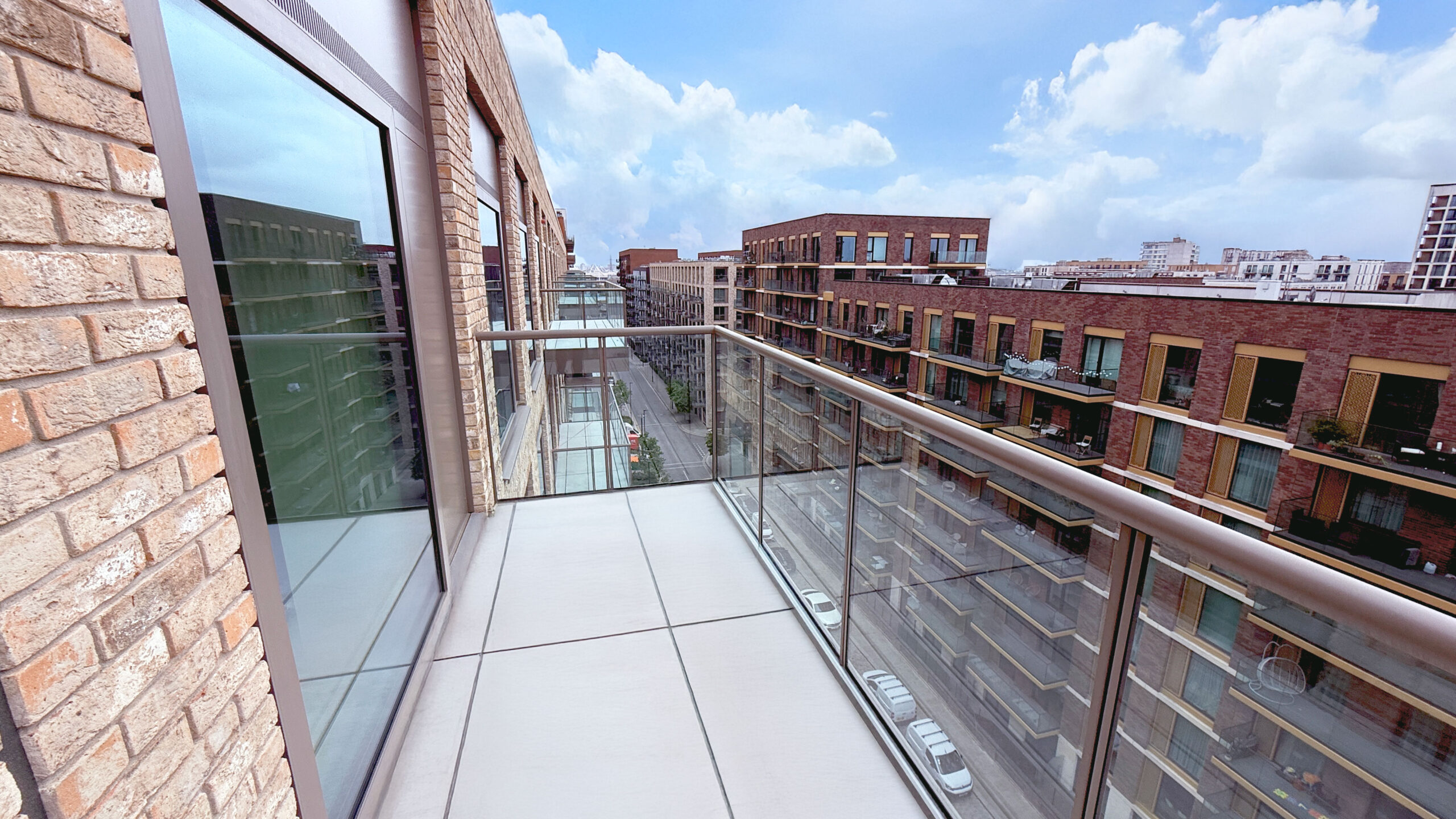
“Glass has long been the material of choice for the balustrades of high-rise residential and commercial buildings – and it is easy to see why. Glass offers uninterrupted views, it maximises natural light and creates a sleek, contemporary aesthetic that few other materials can match. However, over the past few years, a number of regulatory changes have forced architects, developers and specifiers to look even more closely at exactly which products are suitable for use on high rise developments.
The result isn’t a move away from glass, but a need to carefully specify balustrades to ensure they are fully certified to meet the latest regulations.
A tightening regulatory landscape
In 2020, Building Regulations banned the use of combustible materials on buildings 18 metres tall and above – a restriction that immediately ruled out certain laminated glass products i.e. those that use PVB interlayers for high-rise balconies and terraces. Since the introduction of the Building Safety Act (2022) there has been consistently tighter control of combustible materials used within and on the external walls of buildings. Within this Act, the height threshold was lowered down to 11 metres, extending the ban’s reach to a far larger range of mid-rise developments.
The Building Safety Act then raised the stakes further, placing clear legal accountability on architects and developers for fire safety compliance across a building’s entire lifecycle. Since then, Approved Document B has been updated to remove all references to the British Standard reaction-to-fire test and replaced it with European reaction-to-fire classifications. The aim was to eliminate any confusion caused by operating a dual BS and EN system.
For specifiers, the practical effect has been to rule out several materials that were, until recently, standard specification choices for high-rise balustrading.
Why glass retains its appeal
Despite the legislation change, glass hasn’t fallen out of favour – the challenge has simply shifted from “should we use glass?” to “which glass can we use?”
Not all glass performs equally under the new rules. Monolithic (single-pane) glass has traditionally been used across many glazing applications, including balconies, but it comes with real safety limitations at height. There is the risk of spontaneous breakage and, critically, no failsafe barrier once the pane is significantly damaged, which increases the risk of falls.
Traditional laminated glass improves on this considerably. Its multi-layer construction means that if the glass breaks, the interlayer holds the pieces together, maintaining a protective barrier rather than allowing shards to fall. It is also more resistant to breaking under mechanical stress in the first place. The downside is that the PVB interlayer used in most traditional laminated glass doesn’t meet the European A2 reaction-to-fire classification now required under Approved Document B. PVB layers break down at high temperature and burn very easily, like a fuel.
Innovation closing the gap
This is where innovation in product development has come to the forefront. Pyroguard has developed a laminated glass balustrade solution built around a non-flammable, intumescent gel interlayer, in place of PVB. The result, Pyroguard Balustrades Evo, offers a cost-effective and sustainable alternative to aluminium railing systems. This type of laminated fire safety glass is suitable for use in balustrade applications over 11 metres when installed within a certified system. Pyroguard Balustrades Evo achieves A2 fire-rated performance, while retaining all the safety benefits of laminated construction. This means it is compliant with current Approved Document B requirements, without compromising on the failsafe protection for which laminated glass is renowned.
Crucially, specifiers don’t have to trade performance for compliance. Light transmission is in the 84–88% range, so this type of balustrading retains the clarity and brightness that make glass desirable in the first place and the product meets line load, wind load and point load criteria. The product has already been proven on high-profile residential schemes, including Deanston Wharf in London and Quantock House in Somerset, demonstrating that glass can still be successfully integrated into tall building design without compromising on safety.
A safer future for a tried and trusted material
Fire safety regulations have brought about significant changes in the way glass is specified for high-rise balconies. Without doubt, the recent innovations in fire-rated glass have addressed the challenges brought about by the latest fire safety regulations, while simultaneously enhancing performance characteristics.
Careful consideration of materials used and reassurance through test certification is helping to ensure that specifiers can still choose glass balustrades for tall buildings that are lighter, more sustainable and with the strong aesthetics for which they are renowned.”
To find out more contact us.